
How to Manage Fear of Injury and Build Confidence in New Skills
Fear is a common and powerful emotion in gymnastics, particularly when it comes to the prospect of injury. This fear can arise from personal experiences or the unsettling sight of others getting hurt. It often looms large in the minds of young gymnasts, holding them back from fully committing to new skills and progressing in their training. However, understanding this fear and learning to navigate it is crucial for any gymnast aiming to reach their full potential.
The Nature of Fear in Gymnastics
Fear is a natural instinct, one that protects us from potential harm. In gymnastics, where the stakes involve physical challenges and the risk of injury is ever-present, this instinct can become heightened. Gymnasts may find themselves hesitating before attempting a new skill, fearing they might fall, hit the equipment, or suffer a more serious injury. This instinctual response can create a mental barrier that prevents them from advancing and achieving their goals.
The Importance of Mental Coaching
At Gymnastics Mindset Academy, we recognize that mental coaching plays a pivotal role in overcoming fear. It’s not just about teaching skills; it’s about helping gymnasts understand the underlying causes of their fear and addressing them head-on. This approach is essential in fostering a positive mindset and building resilience.
Take Deanna, for example. When she first joined us as a level 9 gymnast, she was struggling with a significant fear of backwards tumbling. This fear was so intense that she rearranged her routines to avoid these elements, opting instead for forward connections. It wasn’t that Deanna lacked the physical ability; she simply needed the mental tools to confront her fears and rediscover her confidence.
After working with us, Deanna learned to confront her fear of falling and hitting the equipment. She began to understand that her fears, while valid, didn’t have to dictate her actions. With the right support, Deanna not only overcame her fears but also advanced to level 10, mastering a Yurchenko vault, a double pike on floor, and a back handspring layout on beam.
Deanna’s Reflection: “I was so scared of my backwards tumbling that I avoided it altogether. But with the right tools and support, I learned to trust myself. Now I’m doing skills I never thought possible!”
Embracing Fear as Part of the Journey
Understanding that fear is a part of the journey is essential for gymnasts. It’s easy to feel isolated in their experiences, but the truth is that every gymnast faces fear at some point. Kaley’s story illustrates this well. She was on an elite track, filled with big aspirations that excited her but also created anxiety. The pressure to perform at a high level can amplify fears, especially when new skills come into play.
Through our coaching, Kaley discovered that her fear didn’t define her abilities. Instead, she learned to navigate these emotions, gradually building the confidence she needed to excel. Her hard work culminated in a remarkable achievement as she became the Level 9 National Champion on Trampoline and was invited to join the National Jumpstart Team.
Kaley’s Insight: “The fear of not being good enough used to hold me back, but now I see my fear as a challenge. I know I can achieve my dreams, and I’m excited about my journey!”
The Role of Community and Support
Building a supportive community around gymnasts is crucial in helping them manage their fears. Encouragement from coaches, teammates, and parents can create an environment where gymnasts feel safe to express their fears and frustrations. Open communication fosters understanding and reinforces the idea that it’s okay to struggle.
One of the significant benefits of being part of a program like ours is the built-in community it provides. Many gymnasts may not have this level of support in their home gym, but being surrounded by like-minded parents and fellow gymnasts who are also working on their mental game can be incredibly beneficial. This community serves as a source of encouragement, motivation, and understanding, allowing gymnasts and their families to share experiences and insights.
A parent shared how this sense of community impacted her daughter: “Knowing my daughter isn’t the only one struggling helps me take a step back and feel better. The support from the academy has made such a difference!”
When gymnasts realize they are not alone in their experiences, it can significantly ease the burden of fear. They can share their stories, learn from one another, and gain strength from the shared journey.
Finding Strength in Vulnerability
Another key aspect of managing fear is acknowledging vulnerability. Gymnasts must learn to embrace their fears instead of running from them. By doing so, they can gain insights into their emotions and develop strategies to cope with anxiety. This process is not always easy, but it is profoundly rewarding.
Embracing vulnerability can lead to personal growth and resilience. When gymnasts confront their fears, they often discover strengths they didn’t know they had. As they work through their anxieties, they develop a deeper understanding of themselves and their capabilities.
The Journey of Growth and Confidence
Overcoming fear is a journey, not a destination. It requires patience, persistence, and a willingness to face discomfort. Each gymnast’s experience is unique, and progress may come in various forms. It’s essential to celebrate the small victories along the way, as they contribute to the larger goal of mastery.
As gymnasts learn to confront their fears, they begin to view challenges as opportunities for growth rather than obstacles. This shift in perspective can lead to remarkable transformations in their performance and overall well-being.
Conclusion: Fear is a Stepping Stone
Fear of injury is a common challenge in gymnastics, but it doesn’t have to define a gymnast’s journey. By addressing the psychological aspects of performance and providing the tools to manage fear, we empower gymnasts to pursue their goals with confidence.
Remember, fear is a natural part of the process. It can serve as a stepping stone to greatness when approached with the right mindset and support. As demonstrated through the experiences of gymnasts like Deanna and Kaley, overcoming fear can lead to extraordinary achievements and a fulfilling gymnastics journey.
Key Takeaways:
- Fear of injury is a common challenge among gymnasts but can be managed through mental coaching.
- Building a supportive community helps gymnasts confront their fears.
- Embracing vulnerability leads to personal growth and resilience.
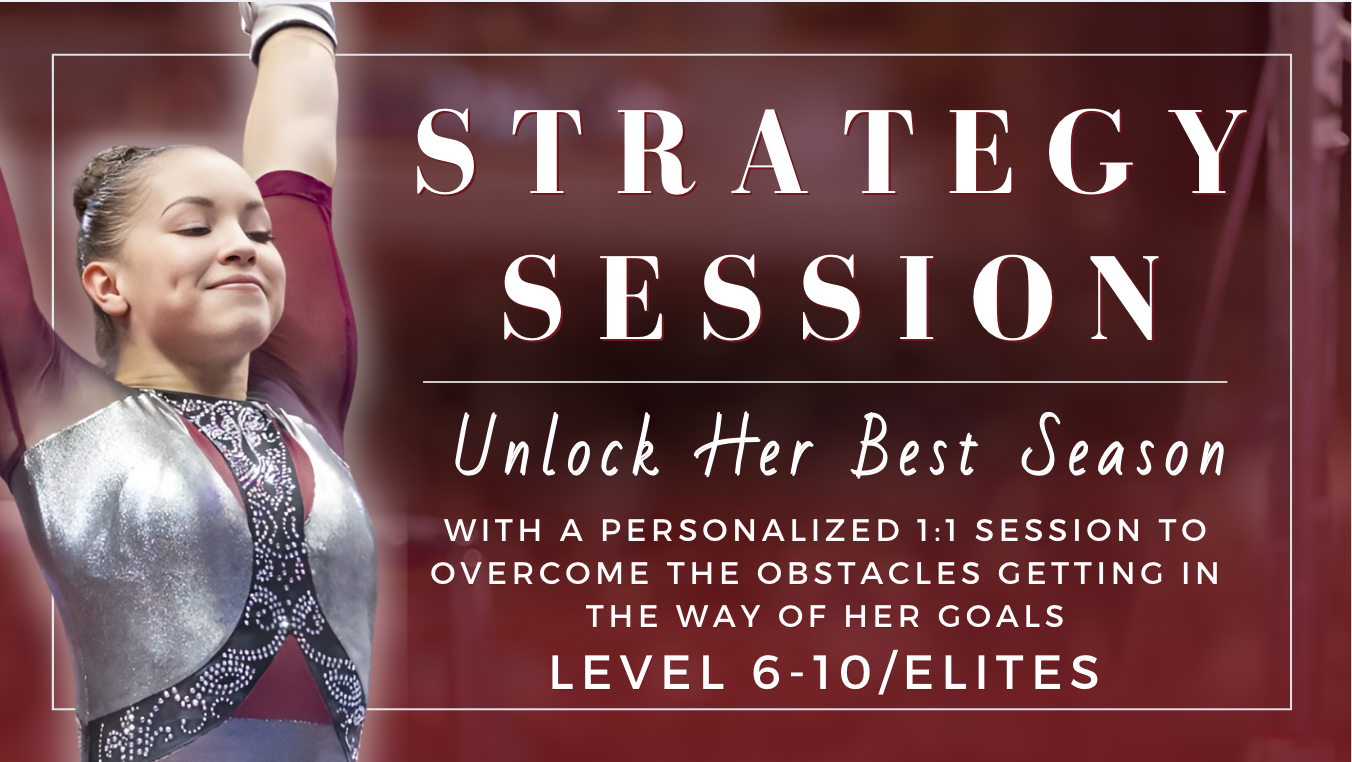
Get Started With a FREE 1:1 Strategy Session
In this free 1:1 strategy session, your gymnast will clarify her goals for the year and determine what it will take to reach them and what will get in her way. Then we will discuss if she is a good fit for our mental performance coaching and training program and the next steps with you both.
Regardless of if you join us, you will walk away with our before and after goal setting process she can use again and again to get crystal clear on her goals and her path to reach them.
Free Training Clinic for Compulsory Gymnastics Parents!
The Proven 4-Step Mindset Method Your Gymnast Needs to Unlock Her Full Potential in the Gym and Out on the Competition Floor… So She Can Take Her Gymnastics to the Next Level!
Click the button below to get the parent training clinic every gymnastics mom needs to help their gymnast finally believe in themselves.