The Secret to Competing with Confidence (Even When You Feel Nervous)
Every gymnast wants to feel confident when they step onto the competition floor. They want to trust their training, go for their skills, and perform at their best. But for many gymnasts, confidence seems to disappear when they need it the most. Instead of feeling ready, they feel shaky and uncertain. Their heart races, their breathing speeds up, and their mind fills with doubt.
This is where the biggest misconception about confidence comes in. Many gymnasts believe that confidence means feeling fearless, calm, and completely in control. They assume that the gymnasts who hit under pressure must not feel nervous at all. But that’s not true. The gymnasts who compete with confidence are not the ones who never feel nerves—they are the ones who have learned how to compete well despite them.
Why Nerves Show Up Before and During Competition
Nerves are not a sign that a gymnast isn’t ready. In fact, nerves are a natural response to the brain recognizing that something important is about to happen. The body releases adrenaline, the heart beats faster, and energy levels rise. This reaction is not a problem—it’s the body preparing for peak performance. The problem comes when gymnasts interpret these feelings as a sign that something is wrong.
Many gymnasts feel great in practice but struggle in competition because of this exact shift in perspective. In the gym, they feel comfortable. There are no scores, no judges, no expectations outside of training. But on meet day, everything feels different. The setting changes, the stakes feel higher, and their brain starts to register competition as a high-pressure situation. If they are not mentally prepared for this, they will react to these normal nerves by hesitating, rushing, or freezing.
The Difference Between Gymnasts Who Hit Under Pressure and Those Who Don’t
Gymnasts who consistently perform well in competition do not magically feel confident all the time. They have trained themselves to handle the nerves that show up, so instead of panicking, they know how to focus and trust themselves. This is why two gymnasts with the same skills and training can have completely different competition experiences. One will step onto the floor, feel a wave of nerves, and immediately doubt herself. The other will step onto the floor, feel those same nerves, but know how to channel them into focus and trust.
The difference between these gymnasts is not just in how much they have practiced their routines. It’s in how they have trained their minds. Confidence does not come from eliminating nerves. It comes from knowing how to compete with them.
How Sydney Learned to Trust Herself in Competition
Sydney was a high-level gymnast who struggled with competition nerves for years. In the gym, she was consistent and confident. But as soon as she got to a meet, she felt like a different gymnast. Her thoughts spiraled into worry, and she started to focus on everything that could go wrong.
“I knew I could do my routines, but as soon as I got to a meet, it felt like I forgot how to trust myself,” she said. “I would get so caught up in my nerves that I couldn’t focus, and I would end up holding back or making mistakes I never made in practice.”
For a long time, Sydney thought the solution was to train harder. She did extra pressure sets, more numbers, and tried to convince herself that she just needed to be tougher. But no matter how much she trained, her nerves still took over in competition.
Everything changed when she started working on her mindset. She learned how to handle the nerves instead of fighting them. She stopped trying to force confidence and started training herself to compete with trust. Once she made that shift, she was able to step onto the floor, feel the adrenaline, and still go for her skills with full commitment. That season, she qualified for Level 10 Nationals and competed with confidence—even in high-pressure moments.
Confidence Is Not the Absence of Fear
One of the biggest misconceptions about confidence is that it means not feeling afraid. In reality, confidence is the ability to move forward even when fear and doubt are present. The gymnasts who compete at their best are not the ones who never experience nerves. They are the ones who have trained themselves to perform despite them.
This is why mental preparation is just as important as physical preparation. Gymnasts spend hours in the gym training their bodies, but many never train their minds for the realities of competition. They assume that confidence will come naturally when they are good enough. But confidence is not something that just appears. It is something that is built through intentional mental training.
The Role of Mental Training in Competition Confidence
Mental training is what separates gymnasts who struggle with competition nerves from those who perform well under pressure. It teaches them how to manage their thoughts, stay focused on what they can control, and trust themselves even when doubt creeps in. Just like physical training, mental training is a skill that can be developed over time.
Gymnasts who train their minds for competition know how to:
- Recognize that nerves are normal and not something to be feared.
- Redirect their focus from doubt to trust.
- Use strategies to stay present and avoid overthinking.
- Compete with the same confidence they have in practice.
This is why some gymnasts consistently hit their routines in competition while others struggle. It’s not that the confident gymnasts never feel nervous. It’s that they have learned how to compete with those nerves instead of letting them take over.
What This Means for Your Gymnast
If your gymnast struggles with meet-day nerves, the solution is not to work harder or train more. She already knows how to do her routines. The real solution is to help her build the mental skills she needs to trust herself in competition.
When gymnasts learn to prepare their minds as well as their bodies, everything changes. They stop feeling like a different gymnast in competition. They stop doubting themselves and start trusting their training. They stop letting nerves control their performance and start competing with confidence—no matter what they feel in the moment.
This is exactly what we teach inside our free training for moms—so you can help your gymnast develop the tools she needs to compete at her full potential. Confidence is not about eliminating nerves. It’s about learning how to perform with them.
If your gymnast is ready to start competing with trust instead of fear, she doesn’t need more hours in the gym. She needs the right mindset tools.
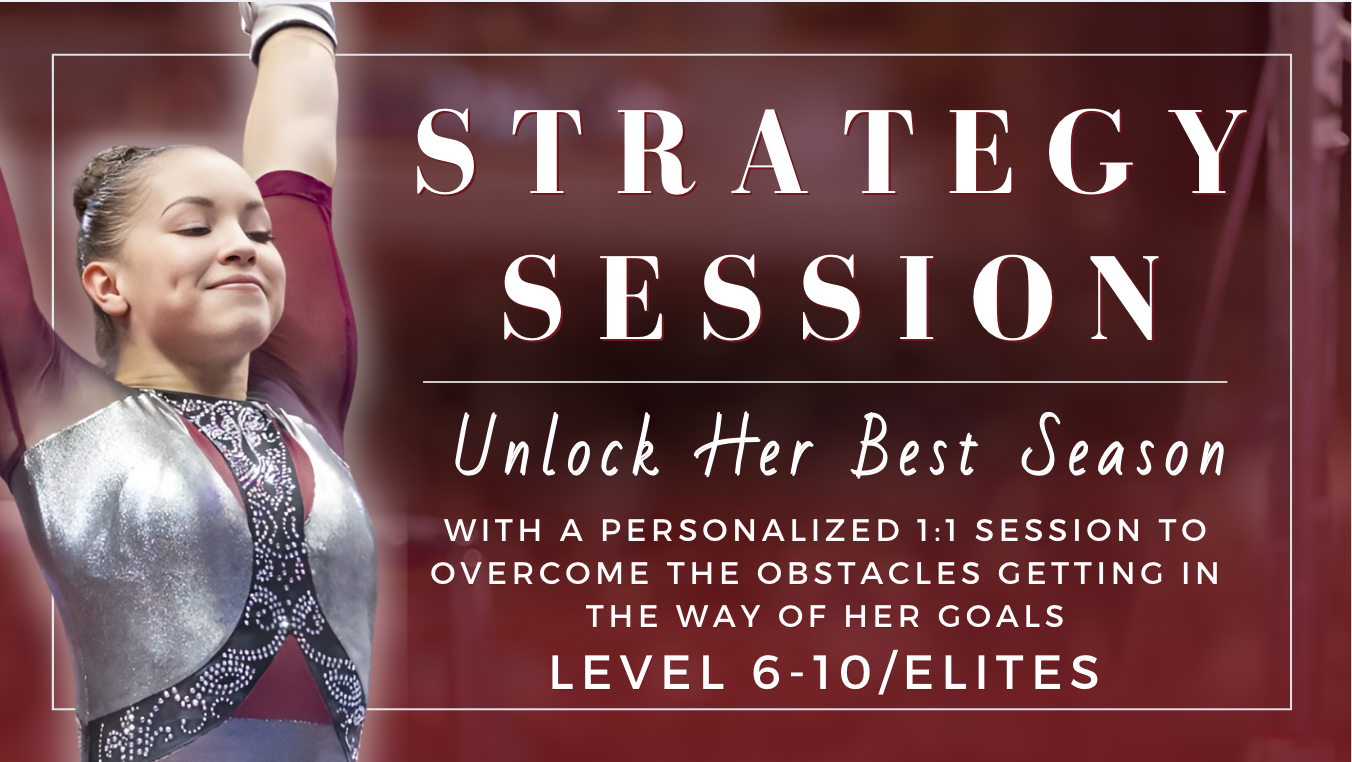
Get Started With a FREE 1:1 Strategy Session
In this free 1:1 strategy session, your gymnast will clarify her goals for the year and determine what it will take to reach them and what will get in her way. Then we will discuss if she is a good fit for our mental performance coaching and training program and the next steps with you both.
Regardless of if you join us, you will walk away with our before and after goal setting process she can use again and again to get crystal clear on her goals and her path to reach them.
Free Training Clinic for Compulsory Gymnastics Parents!
The Proven 4-Step Mindset Method Your Gymnast Needs to Unlock Her Full Potential in the Gym and Out on the Competition Floor… So She Can Take Her Gymnastics to the Next Level!
Click the button below to get the parent training clinic every gymnastics mom needs to help their gymnast finally believe in themselves.