Why Gymnasts Struggle with Nerves Before a Meet—And How to Handle the Pressure
Meet day is supposed to be exciting, yet for so many gymnasts, it’s the most stressful day of the season. Instead of feeling ready to perform, they feel their heart racing, their breathing getting shallow, and their stomach tying itself into knots. The gym, which normally feels like home, suddenly feels like a pressure cooker, filled with expectations, judgment, and the fear of failing when it matters most.
The stakes feel impossibly high. A gymnast might be competing for a qualifying score, a national title, or a college recruiter’s attention, and in those moments, the pressure to perform becomes overwhelming. She knows she has the skills, she’s landed them hundreds of times in practice—but the second she steps onto the competition floor, doubt creeps in.
The Science Behind Gymnastics Competition Nerves
The truth is, freaking out before a competition is normal. The human brain is wired for survival, which means that when it senses pressure, unpredictability, or the possibility of failure, it triggers the fight-or-flight response. The problem? A gymnastics meet is not a life-or-death situation. But to the brain, it feels like one. That’s why gymnasts experience shaky hands, tight muscles, trouble breathing, and a sudden inability to trust their skills.
This is why gymnasts balk on skills they can normally do in their sleep. Why they freeze on beam. Why they land short on vault.
Meredith’s Struggle with Mental Blocks in Gymnastics
For Meredith, this was exactly what happened. She had been working on her bail on bars for months and could do it in practice—until she had to compete it. The moment she got ready to go, fear took over. She hesitated, got frustrated, and started overthinking every move.
“I just couldn’t make myself go,” she admitted. “I wanted to so badly, but the fear wouldn’t go away.”
Her brain was stuck in a loop—telling her that if she missed, she’d get hurt. That she’d let her coach down. That she’d never move up a level.
Meredith’s breakthrough came when she realized that fear itself wasn’t the problem—her reaction to it was. Once she learned how to stay calm under pressure, trust herself, and not panic when fear showed up, she was finally able to compete her bail. That season, she hit her routine, qualified for regionals, and proved to herself that she could handle the pressure.
Why Some Gymnasts Hit Under Pressure—and Others Don’t
If you’ve ever watched a gymnast who always delivers in competition, you’ve probably wondered: What does she have that my gymnast doesn’t?
The answer isn’t more talent. It isn’t better coaching. It isn’t even better technique.
It’s her mind.
Gymnasts who hit when it counts don’t get lucky—they’ve trained their brains to stay calm, focused, and confident when the pressure is on.
Katie’s Battle with Gymnastics Performance Anxiety
Katie was a Level 10 gymnast with college scholarship dreams—but every time she stepped onto the competition floor, she felt like she was crumbling under the pressure. No matter how many pressure sets she did, she couldn’t stop the doubt and fear from creeping in.
“I was working so hard, but I wasn’t seeing the results I wanted,” she said. “I felt like I was failing.”
But when she started training her mind the same way she trained her skills, everything changed.
She learned how to manage her thoughts, how to stop spiraling after a mistake, and how to compete with confidence even when she felt nervous.
The result? She competed a Yurchenko full for the first time. She scored a 10 on vault in high school. She qualified for USAG Nationals—her biggest goal.
“I finally felt like I was in control,” Katie said. “Instead of trying to push through the anxiety, I learned how to use it. And that made all the difference.”
When a Bad Meet Shakes Her Confidence
But what about when a gymnast has a rough competition? What happens when she falls, makes mistakes, and leaves the meet feeling like she failed?
Most gymnasts internalize it—they start believing:
- “I’m just not good enough.”
- “I can’t handle pressure.”
- “What if this happens again?”
But the gymnasts who come back stronger after a tough meet? They don’t dwell on what went wrong—they focus on what’s next.
Anne’s Comeback After a Tough Season
Anne is a gymnast who expects perfection from herself. If she isn’t at the top, she feels like she’s failing. So when meet season hit and she started losing skills under pressure, she panicked.
She regressed on beam, struggled on bars, and felt like she was falling apart just when she needed to be at her best. It wasn’t until she started working on her mindset around meet season that things started to change.
Instead of focusing on where she was falling short, she focused on:
- How she treated herself after mistakes.
- Separating her performance from her self-worth.
- Training her brain to compete with confidence.
That’s when she stopped unraveling in competition—and started believing in herself again.
Competing with Confidence Starts in the Mind
Fear, doubt, and pressure will always be there. The question is: How will she handle them?
A confident gymnast isn’t one who never gets nervous.
She’s one who knows exactly how to train her mind to handle the nerves, pressure, and fear—so she can perform at her best when it counts.
Some gymnasts will always struggle when the stakes are high. They will continue to lose skills when they need them most, get stuck in mental blocks, and crumble under pressure—not because they aren’t talented enough, but because they never learned how to train their minds.
But the gymnasts who succeed? The ones who hit when it counts, bounce back stronger, and compete with confidence? They aren’t just training their bodies. They are training their minds. And that’s what makes all the difference.
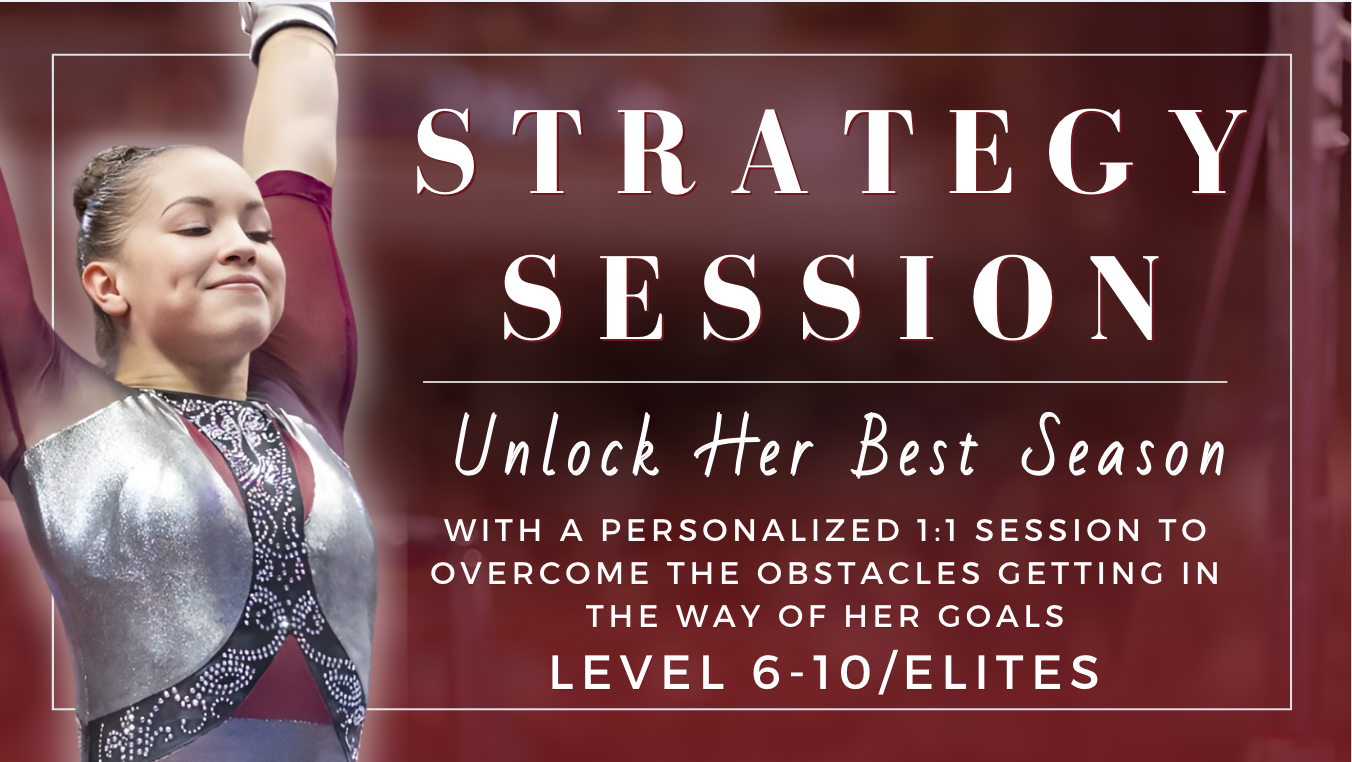
Get Started With a FREE 1:1 Strategy Session
In this free 1:1 strategy session, your gymnast will clarify her goals for the year and determine what it will take to reach them and what will get in her way. Then we will discuss if she is a good fit for our mental performance coaching and training program and the next steps with you both.
Regardless of if you join us, you will walk away with our before and after goal setting process she can use again and again to get crystal clear on her goals and her path to reach them.
Free Training Clinic for Compulsory Gymnastics Parents!
The Proven 4-Step Mindset Method Your Gymnast Needs to Unlock Her Full Potential in the Gym and Out on the Competition Floor… So She Can Take Her Gymnastics to the Next Level!
Click the button below to get the parent training clinic every gymnastics mom needs to help their gymnast finally believe in themselves.